Accelerated Computing research group

Projects

The Accelerated Computing research group participates in many national and international research projects and collaborations.

ORCRIST: Optimized Ray-tracing for Cloud-Radiation Interaction Simulations in 3D using GPUs and Machine Learning

Optimized Ray-tracing for Cloud-Radiation Interaction Simulations in 3D using GPUs and Machine Learning

Accurately simulating how radiation in the form of sunlight and emitted heat moves through Earth's atmosphere is crucial for predicting weather, climate change, wildfire evolution, and solar energy production. Current models simplify this complex 3D process to save computing power, because radiation computations are very expensive. ORCRIST will develop fast, highly detailed 3D radiative transfer models using advanced GPU computing and machine learning. By better capturing how clouds and wildfire plumes interact with radiation, this project will enable applications in a wide range of industrial sectors and support both science and society's response to today's environmental challenges.

SUNBEAM: Scalable UNified Beam-tracing for Earth–Atmosphere Models

Scalable UNified Beam-tracing for Earth–Atmosphere Models

Understanding how sunlight and heat move through the atmosphere is essential for accurate climate predictions and the effective use of renewable energy. However, today’s weather and climate models rely on simplified one-dimensional radiation calculations, because it is too computationally expensive to model the complex three-dimensional (3D) interactions between sunlight, clouds, aerosols, and terrain. SUNBEAM tackles the long-standing challenge of realistic 3D radiative transfer by harnessing the power of GPU computing and artificial intelligence. By developing a cutting-edge Monte Carlo ray tracing model, to simulate the complex interactions between sunlight, clouds, and the Earth's surface. This breakthrough, enabled by multiple advanced computing and artificial intelligence techniques, will allow high-resolution models to capture how radiation truly behaves in our atmosphere, leading to better forecasts, improved climate projections, and smarter renewable energy planning. By overcoming current computational limits, SUNBEAM paves the way for the next generation of atmospheric modeling.

Learning From The Past: Making Software Greener and Faster By Mining Past Performance Data

Making Software Greener and Faster By Mining Past Performance Data

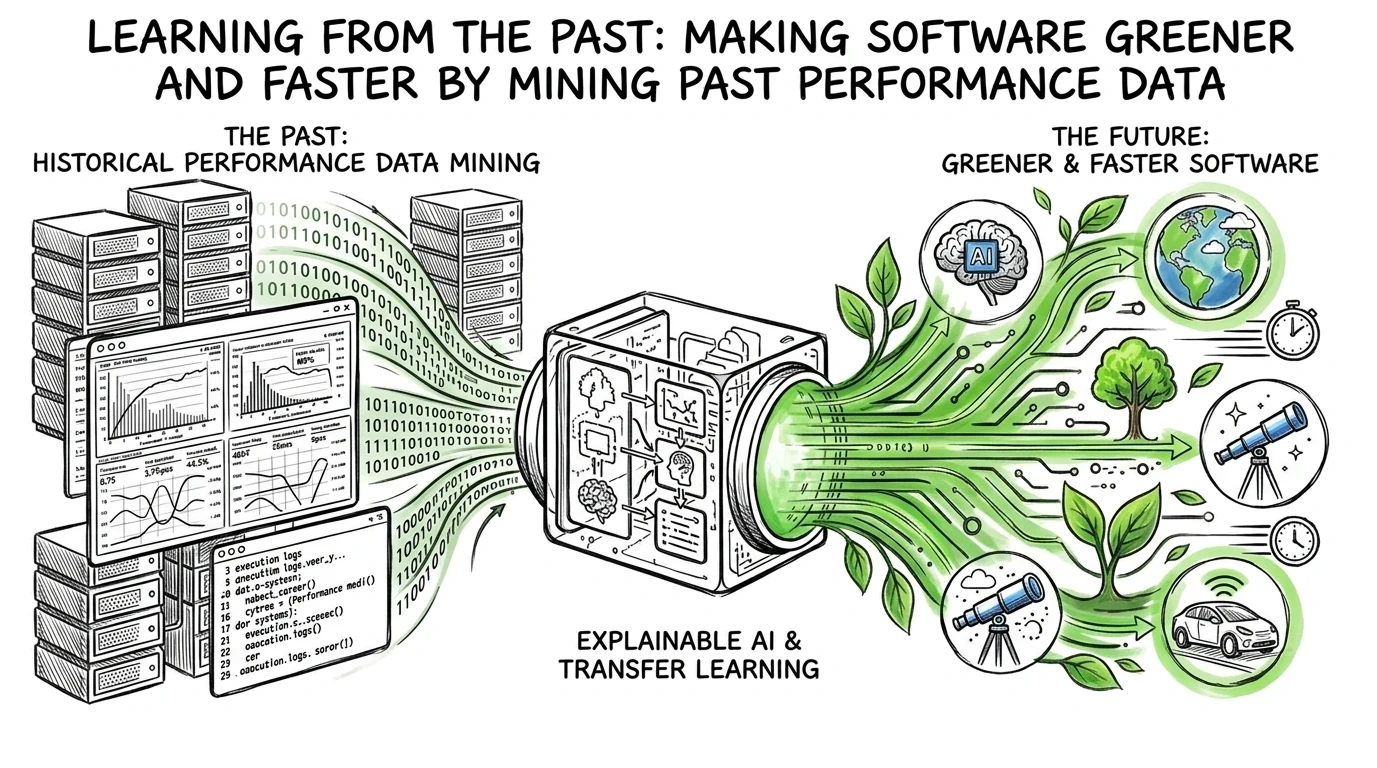
This project aims to make powerful computing applications, like those used in Artificial Intelligence (AI), climate modeling, astronomy, and self-driving cars, run faster and greener. By mining extensive data sets on the specific interactions between software and hardware, the project develops intelligent tools using explainable AI and transfer learning that learn from past software optimizations to improve future software optimization sessions and automatically adjust software to run more efficiently. The result: better performance, lower energy use, and reduced carbon emissions from the world’s fastest computers.

AutoPEAC: Autotuning for Performance-Portable and Energy-Efficient Applications and Computing

Autotuning for Performance-Portable and Energy-Efficient Applications and Computing

Modern computing systems are becoming increasingly heterogeneous, integrating CPUs, GPUs, and specialized accelerators. While this diversity enables higher performance and energy efficiency, it also complicates software optimization and portability. Applications that are efficient on one platform often underperform on another, requiring repeated manual tuning that is both time-consuming and expertise-intensive. Autotuning, broadly understood as the automatic exploration and optimization of software and hardware parameters—including code variants, compiler options, and power management settings—offers a path toward adaptable and energy-efficient computing. Yet, despite decades of research, its adoption remains limited. Existing frameworks are often fragmented, incompatible, and integrated with a narrow set of applications. Developers lack comprehensive training, shared datasets, and unified methodologies to employ autotuning efficiently and safely. The AutoPEAC COST Action (Autotuning for Performance-Portable and Energy-Efficient Applications and Computing) will establish a European network of researchers, developers, and computing centers to coordinate efforts in this area. The Action will: * harmonize autotuning approaches and data formats to improve interoperability and reuse; * strengthen education and awareness through tutorials, summer schools, and open materials; * foster research linking autotuning with programmability, such as integrating high-level programming tools with tuning frameworks; and * stimulate collaboration that leads to the use of autotuning in real-world applications. By connecting experts across domains, AutoPEAC will lay the foundation for performance-portable and energy-efficient software ecosystems in Europe, advancing both scientific understanding and practical adoption of adaptive optimization techniques.
ECO-COMPASS: Energy-Conscious Computational Algorithms & Sustainable Science

Energy-Conscious Computational Algorithms & Sustainable Science

Computers are indispensable in science, and large data centres are used daily for simulations and data analysis. In this project, we aim to reduce the energy consumption, and thus the climate impact, of all this computing. We achieve this by fine-tuning the algorithms, so they use the available computing power more efficiently and thus consume less energy. Although this may come at the expense of speed, this is often not a problem. The results of this project will enable scientists to better balance speed, accuracy, and energy consumption.

TRACE: Better Understanding Wildfire-Atmosphere Interaction with GPU RayTracing

Better Understanding Wildfire-Atmosphere Interaction with GPU RayTracing

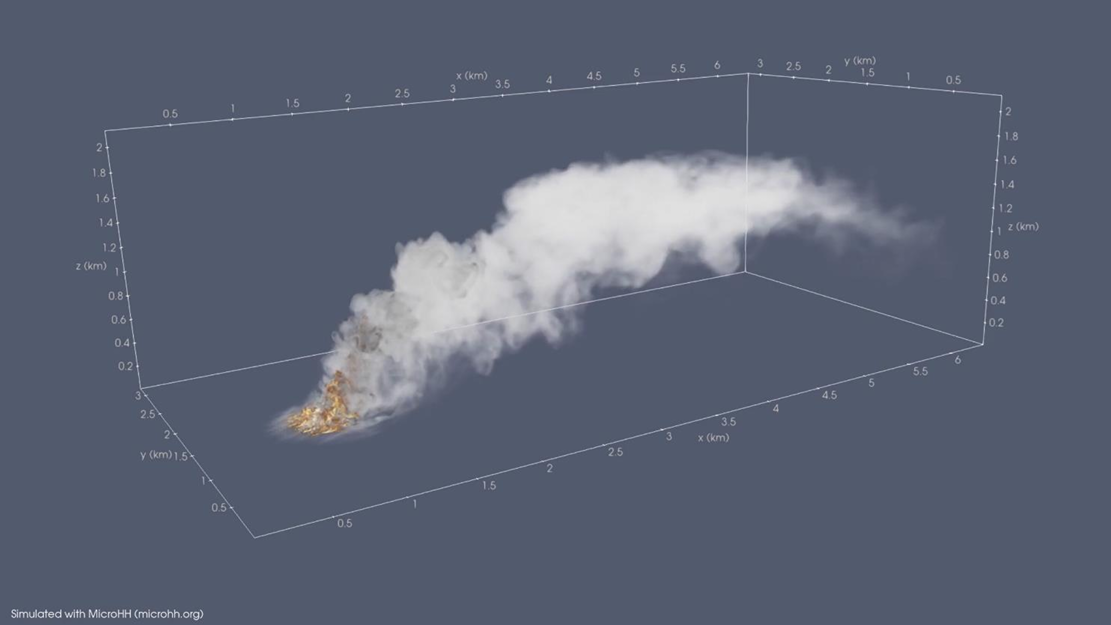
The risk of wildfires is increasing globally due to climate change. Understanding the complex dynamics between wildfires and the atmosphere is crucial for emergency organizations to prepare their response. Fire plumes have complex dynamics associated with high levels of uncertainty. As soon as fire plumes reach the height at which clouds can form, the extra energy released by condensation intensifies the near-surface turbulence and the fire. The TRACE project is developing a new tool to better understand how wildfires and clouds interact. Most current weather models simplify radiation simulations because they take too long to calculate. TRACE is using ray-tracing technology on GPUs (graphics cards) to create faster and more detailed simulations of how both sunlight and heat (thermal radiation) move through the atmosphere. This tool will help scientists study atmosphere-fire feedback, improving the safety of emergency responders, society and ecosystems.

CORTEX: The Center for Optimal, Real-Time Machine Studies of the Explosive Universe

The Center for Optimal, Real-Time Machine Studies of the Explosive Universe

Machine learning has rapidly become an integral part of society, in speech recognition or information retrieval. This is also the case in science, for detecting patterns in nature and the Universe. But the need is growing rapidly for such machines to respond quickly, in the application of self-driving cars and responsive manufacturing for example. On a more fundamental level, self-learning machines help us unveil a dynamical Universe we did not know existed up to recently. Bright explosions appear all over the radio and gravitational-wave sky. Many citizens and scientists are curious to understand where these come from. The aim in CORTEX is to solve these open problems by bridging fundamental research to society.

ESiWACE3: Centre of Excellence in Simulation of Weather and Climate in Europe

Centre of Excellence in Simulation of Weather and Climate in Europe

The ESiWACE3 project aims to build on the success of its predecessor, ESiWACE2, by further advancing Earth system modeling capabilities in Europe. The project will focus on supporting the scientific community in reaching higher readiness levels for exascale supercomputing and facilitating knowledge transfer between various Earth system modeling centers and teams across the continent. ESiWACE3 has three main objectives: (i) to promote the efficient and scalable simulation of weather and climate by sharing knowledge and technology across the Earth system modeling community, (ii) to close common technology knowledge gaps and provide toolboxes for high-resolution Earth system modeling through joint developments, and (iii) to serve as a sustainable community hub for training, communication, and dissemination in high-performance computing for weather and climate modeling in Europe. By bringing together different modeling groups to address these challenges, the project aims to foster collaboration, generate synergies between local efforts, offer targeted support to modeling groups through customized high-performance computing services, and provide training for the next generation of researchers.