Accelerated Computing research group

CORTEX

The Center for Optimal, Real-Time Machine Studies of the Explosive Universe

Abstract

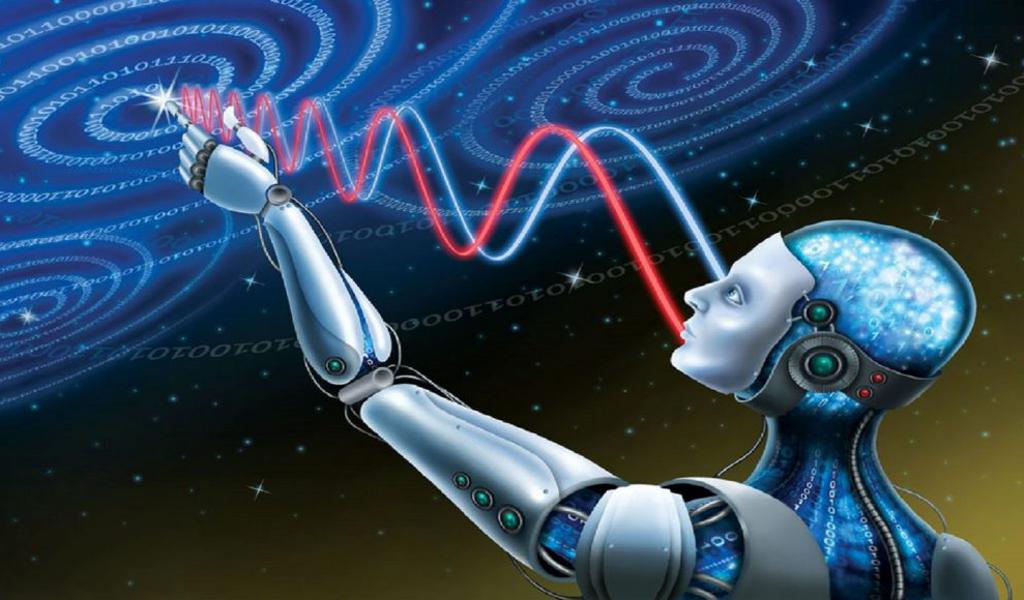
Machine learning has rapidly become an integral part of society, in speech recognition or information retrieval. This is also the case in science, for detecting patterns in nature and the Universe. But the need is growing rapidly for such machines to respond quickly, in the application of self-driving cars and responsive manufacturing for example. On a more fundamental level, self-learning machines help us unveil a dynamical Universe we did not know existed up to recently. Bright explosions appear all over the radio and gravitational-wave sky. Many citizens and scientists are curious to understand where these come from. The aim in CORTEX is to solve these open problems by bridging fundamental research to society.
The Center for Optimal, Real-Time Machine Studies of the Explosive Universe
Ben van Werkhoven

Ben van Werkhoven

Assistant Professor, Group Leader

Ben van Werkhoven is assistant professor at LIACS and head of the Accelerated Computing research group. His research interests lie in High Performance Computing (HPC), software optimization, automatic performance tuning (auto-tuning), energy efficiency, programming models, performance modeling, and the acceleration of scientific applications.

Stijn Heldens

Stijn Heldens

Research Software Engineer

I’m a Dutch computer scientist, currently working as a Research Software Engineer (RSE) at the Netherlands eScience Center and a guest researcher at Leiden University. I enjoy scientific research where my interests lie in high-performance computing, with a particular focus on parallel algorithms, distributed systems, programming languages/compilers, and GPU programming.

Floris-Jan Willemsen

Floris-Jan Willemsen

Postdoc

Floris-Jan is a Postdoc at Leiden University. Floris-Jan recently graduated from the Accelerated Computing research group after completing his PhD. He carried out his PhD research at the Netherlands eScience Center and Leiden University. His research focusses on intelligent, automated optimization of GPU software.

Richard Schoonhoven

Richard Schoonhoven

Postdoc

Richard is currently a Postdoc with the Centrum Wiskunde and Informatica, and the Leiden Institute of Advanced Computer Science. His work focuses on optimizing high-throughput imaging pipelines, both on the software side with gradient-based and blind optimization algorithms, and on the hardware side by tuning GPU kernels. He also works with researchers at the European Synchrotron Radiation Facility, Grenoble, France, and on the low-frequency array pipeline.