Abstract
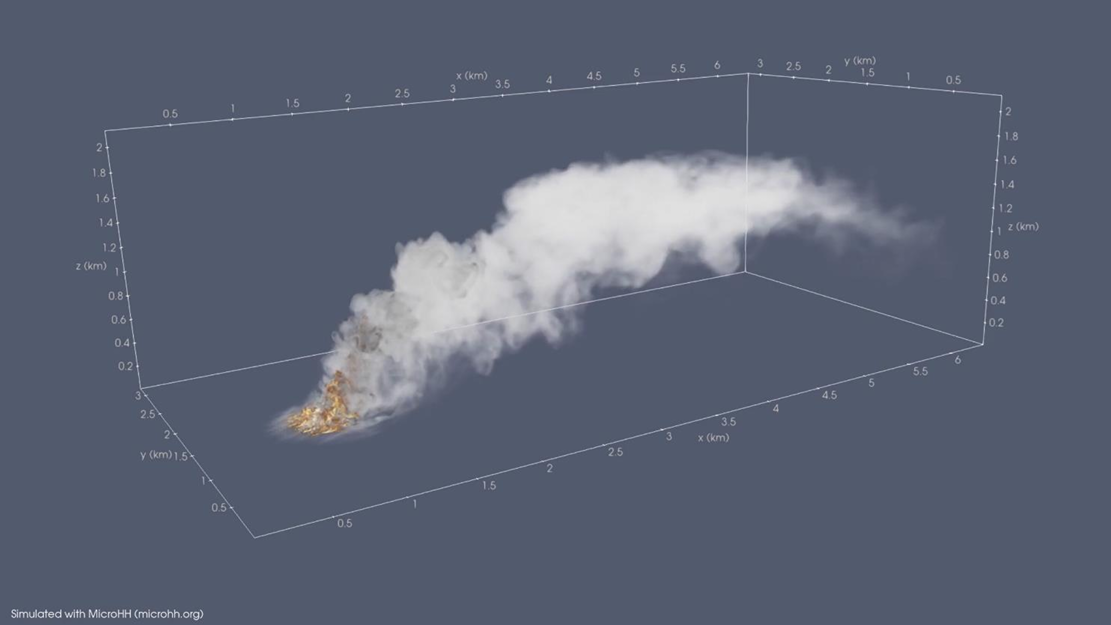
The risk of wildfires is increasing globally due to climate change. Understanding the complex dynamics between wildfires and the atmosphere is crucial for emergency organizations to prepare their response. Fire plumes have complex dynamics associated with high levels of uncertainty. As soon as fire plumes reach the height at which clouds can form, the extra energy released by condensation intensifies the near-surface turbulence and the fire. The TRACE project is developing a new tool to better understand how wildfires and clouds interact. Most current weather models simplify radiation simulations because they take too long to calculate. TRACE is using ray-tracing technology on GPUs (graphics cards) to create faster and more detailed simulations of how both sunlight and heat (thermal radiation) move through the atmosphere. This tool will help scientists study atmosphere-fire feedback, improving the safety of emergency responders, society and ecosystems.